Why Do My Students Practice Every Day but Still Don’t Improve?
Every violin teacher encounters this moment.
A student practices daily. They arrive at lessons prepared. They care deeply about their progress. And yet, week after week, their playing remains stubbornly unchanged. Sometimes it even deteriorates. Tone becomes less centered. Intonation grows inconsistent. Physical tension appears where there once was ease. This situation is especially frustrating because effort is not the issue. When students are practicing consistently and still not improving, the underlying problem is almost never motivation. It is pedagogy.
Practice, in and of itself, does not guarantee progress. What matters is what the student is reinforcing every time they open the case. Practice is often treated as a neutral activity, as though time spent with the instrument automatically leads to growth. In reality, practice is a powerful conditioning process. The body and nervous system adapt precisely to what is repeated. If a student practices with instability, tension, or unclear coordination, those qualities become more deeply embedded with each repetition. Over time, the very act of practicing can entrench habits that actively limit development.
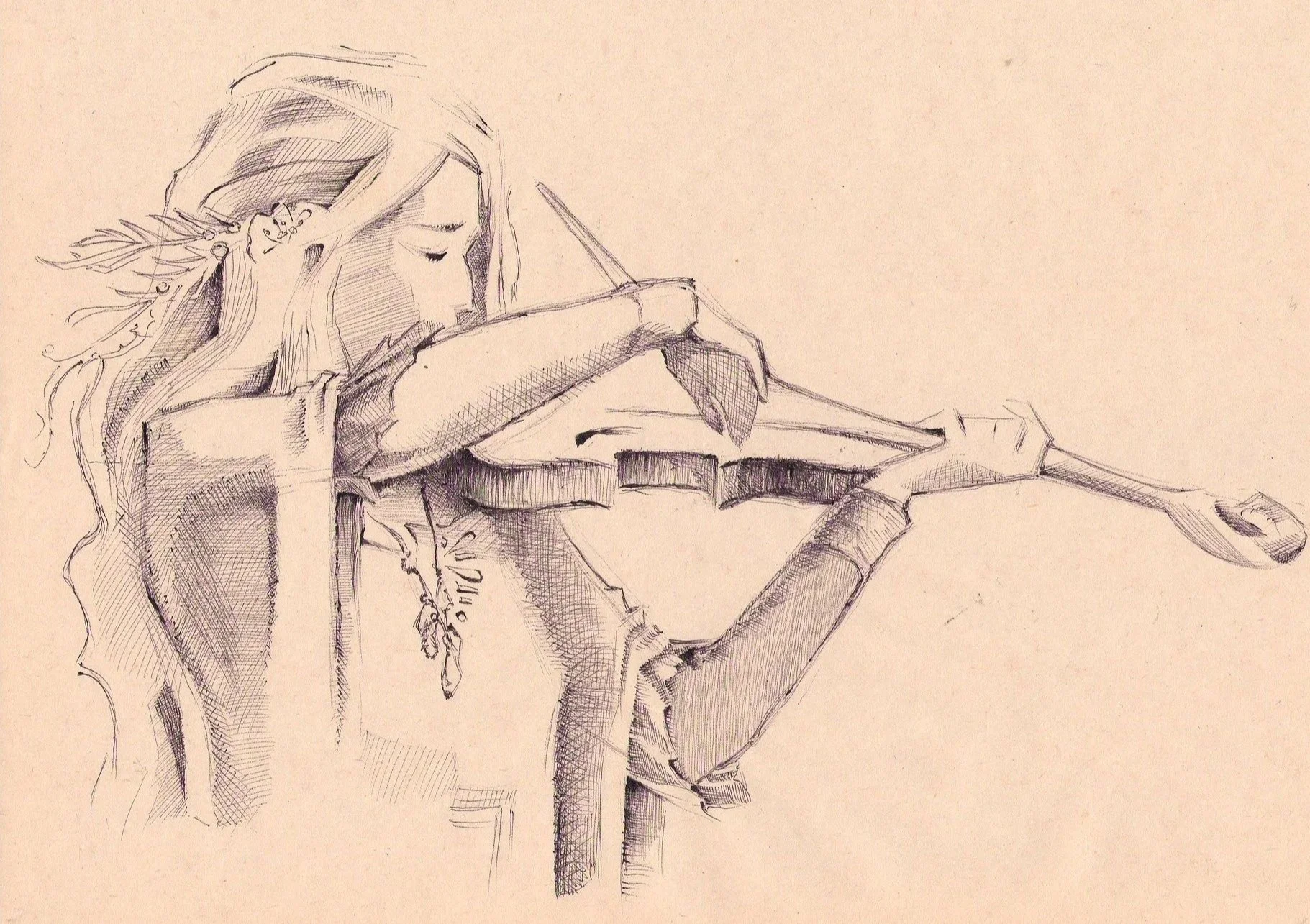
This is why teachers sometimes observe a troubling pattern. A student who once played with relative freedom begins to sound constrained. A technical correction that seemed secure in the lesson does not survive the week. The student is not ignoring instruction. They are simply reinforcing a different set of physical and auditory instructions during independent practice. Many students sincerely believe they are practicing well because they are practicing often. They play through their repertoire, work on assigned passages, and try to meet tempo goals. From their perspective, this feels productive. However, without a clear framework for how improvement actually occurs, practice becomes repetitive rather than corrective. Students repeat what is familiar instead of reorganizing what is inefficient.
In these situations, students are not practicing with awareness of cause and effect. They may be repeating passages that feel uncomfortable without identifying why. They may be playing through tension, assuming effort equals progress. They may be prioritizing continuity over clarity, or speed over stability. Over time, this kind of repetition does not build security. It builds compensation. Regression often emerges quietly. Intonation becomes unreliable because finger patterns are not being reinforced consistently. Tone loses focus because bow contact is unstable. Physical discomfort appears because the student has learned to override feedback from the body. These changes are rarely dramatic at first, which makes them easy to miss until they become entrenched.
Another critical issue is listening. Many students practice without a clearly defined sound concept. They are not listening for resonance, core tone, or balance across strings. Instead, they listen only for correct notes and rhythms. Without a precise auditory goal, the nervous system has nothing reliable to organize around. Practice becomes mechanical rather than intentional, and improvement becomes unpredictable. This is compounded by the fact that most students are never taught how to practice in a diagnostic way. They are told what to practice, but not how to evaluate what is happening while they do it. They do not know how to slow down without losing coordination, how to isolate one variable at a time, or how to stop before fatigue begins to erode quality. As a result, they repeat problems rather than resolve them.
From the teacher’s perspective, this can feel like teaching the same lesson repeatedly. Corrections appear to work in the moment but do not persist. The issue is not that the student forgets. It is that the student lacks a repeatable process for maintaining the correction independently. Without that process, old habits resurface because they are neurologically stronger. The most reliable improvements occur when practice is structured around clarity rather than endurance. Students who progress steadily are not necessarily practicing longer. They are practicing with intention. They understand what they are listening for, what physical sensations indicate balance, and when to stop and recalibrate. Their practice reinforces solutions rather than problems.
This is why the question “Why isn’t this student improving?” is often less useful than a different one: what exactly is this student reinforcing every day during practice? When practice reinforces ease, coordination, and awareness, progress becomes predictable. When it reinforces tension, compensation, and vague goals, improvement becomes fragile no matter how motivated the student may be.
For violin teachers, the solution is rarely to demand more practice. It is to teach students how to practice in a way that aligns effort with outcome. When students learn how to observe, diagnose, and adjust, practice transforms from a routine into a powerful tool for change. Daily practice is not the problem. Unstructured reinforcement is.
Once you start teaching this way ask your students to videotape their lessons and watch them when they are at home. This will serve as added reinforcement for the student to not only remember what you’ve said but to also give them a chance to see the issues for themselves when they arrive during their lesson. If the students can see the problems for themselves, they will become your ally in the practice room.
And once that distinction becomes clear, both teachers and students regain a sense of control over the learning process.
🏆 Ready to Begin Your Journey?
📘 Looking for a complete roadmap to teaching beginners?
Grab our book How to Teach the Violin — your step-by-step guide to setting up advanced players from the very beginning.
Want to develop an even tone? Our book, Bow Exercises for the Expressive Violinist, is an excellent tool to train beginners to have an even tone in all parts of the bow.
Private lessons can make all the difference.
👉 Book your first lesson today and let’s discover the commitment that fits you best!
